Moving Forward with Intention – OASIS Hosts Academic Innovation Accelerator Showcase

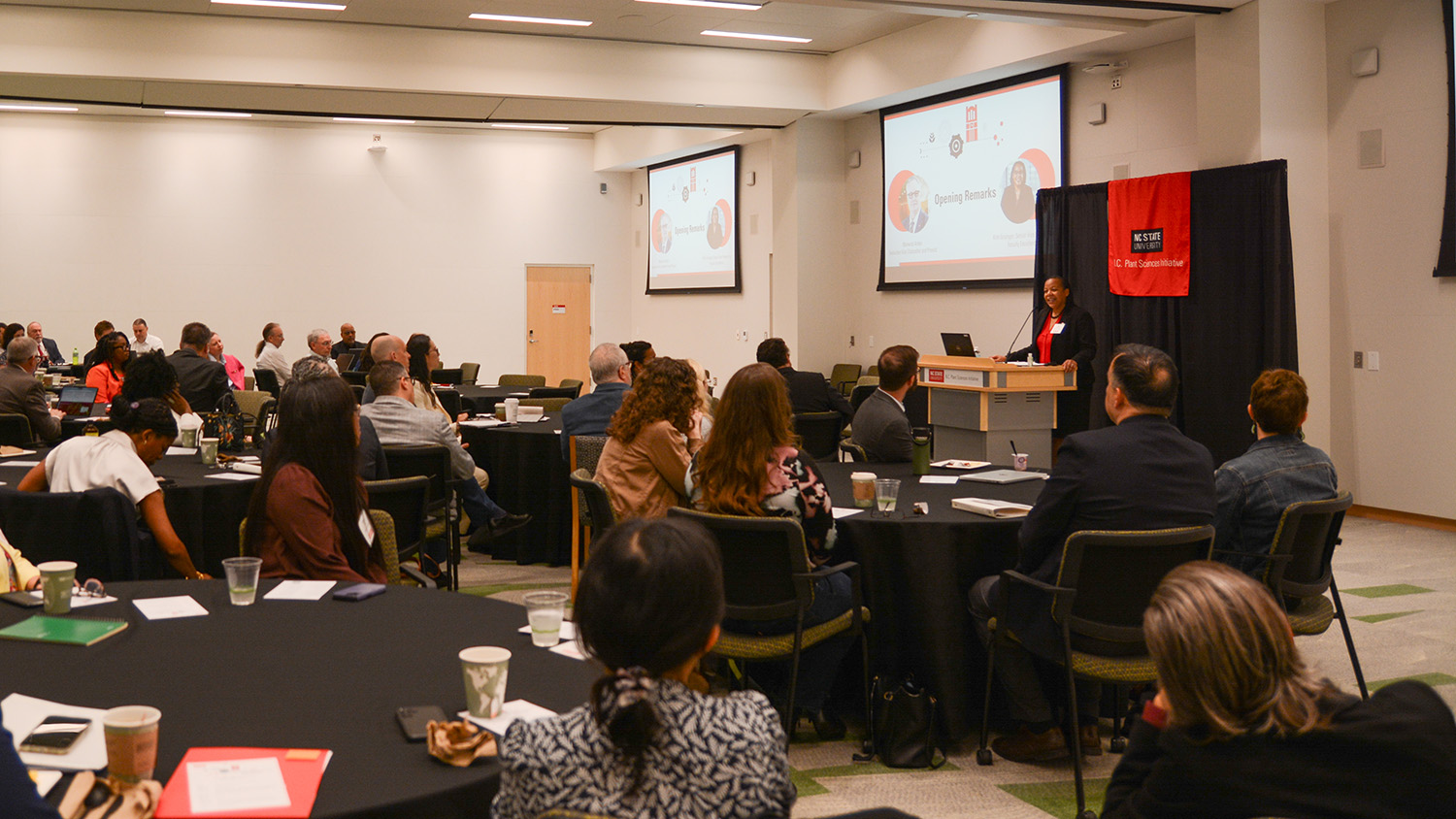
As industries shift and workforce demands grow more complex, NC State continues to respond with a stronger focus on academic quality and innovation. The question isn’t if the university will respond — it’s how. One answer is the OASIS Academic Innovation Accelerator, which celebrated its inaugural cohort during a Showcase event in late April.
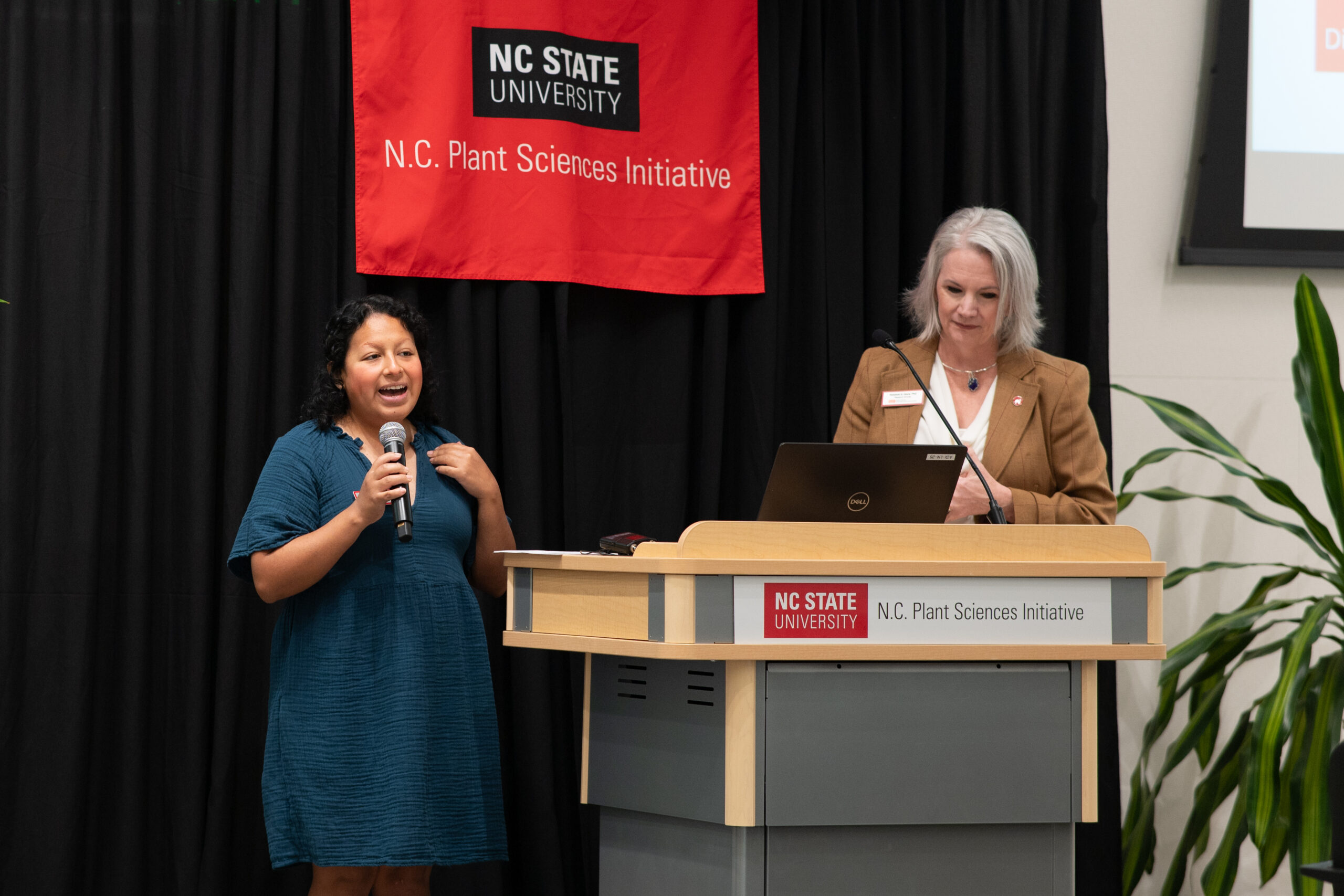
“OASIS is where that intention for innovation becomes infrastructure,” said Helen Chen, senior vice provost for Academic Strategy and Innovation. “Our Accelerator Showcase recognized each project that connected pilot deliverables to long-term academic goals and initiatives.”
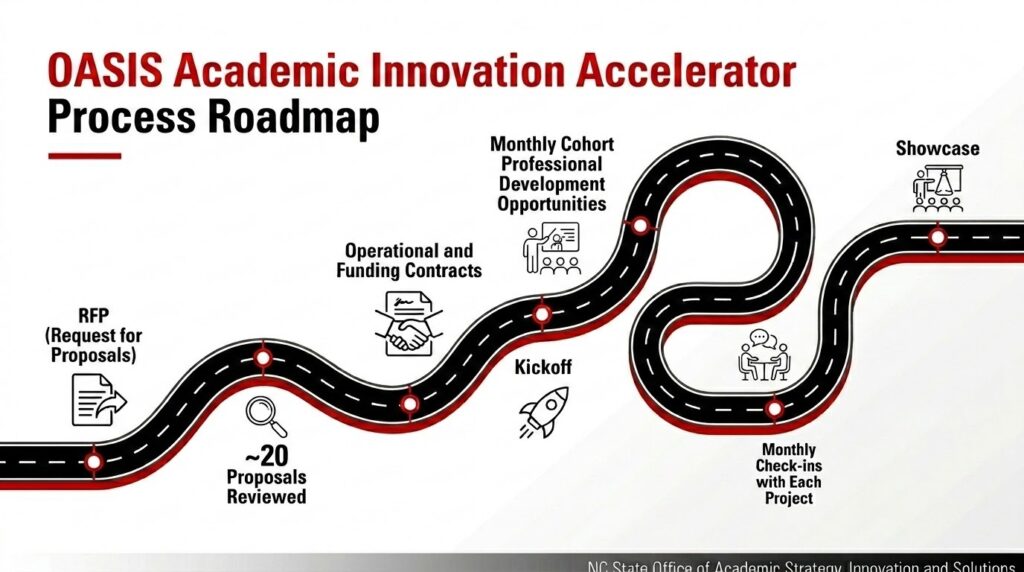
The Accelerator is one of the ways OASIS turns academic innovation into institutional capability — connecting yearlong faculty-led or academic administrative-led projects to NC State’s Wolfpack 2030 strategic plan. As new fields emerge and workforce needs evolve, this is how the university moves forward with intention.
The 2025-26 Accelerator cohort consisted of:
- Institute for Advanced Analytics
- Co-Designing the Next-Generation Analytics Curriculum
- Department of English, College of Humanities and Social Sciences
- Future-Proof the English Degree
- Department of Forestry and Environmental Resources, College of Natural Resources
- Future Force
- NC State Continuing and Lifelong Education (NCSCaLE)
- Noncredit Program Census
- College of Natural Resources
- Designing Esports Workforce Development and Curriculum
- Wilson College of Textiles
- Textiles2Go
- College of Education
- Using Action Research to Guide NC State’s Institutional Readiness for the AI Workforce
Each project within the cohort had a specific focus on academic portfolio and departmental strategy; curriculum redesign based on labor market and skills analytics; innovative learning pathways, research and partnerships; and events, or storytelling and outreach. OASIS provided crucial support for each project from concept to implementation with added operational support including data analysis, labor market research, data visualization, instructional design, survey design, project management, program design, credential innovation and marketing communications
This wasn’t just a year of pilots. Across seven projects, teams delivered peer-reviewed scholarship in progress; new courses and microcredentials spanning textiles sustainability, environmental project management, and analytics; replicable methods for AI-infused curriculum design and curriculum-to-career mapping; and NC State’s first unified noncredit master dataset paired with an interactive Power BI dashboard. Just as important, each project produced the data, frameworks, and partnerships teams now need to pursue external grants and scale their work well beyond the Accelerator year. Together, these outputs are the building blocks of a playbook that other programs across the university can adopt.
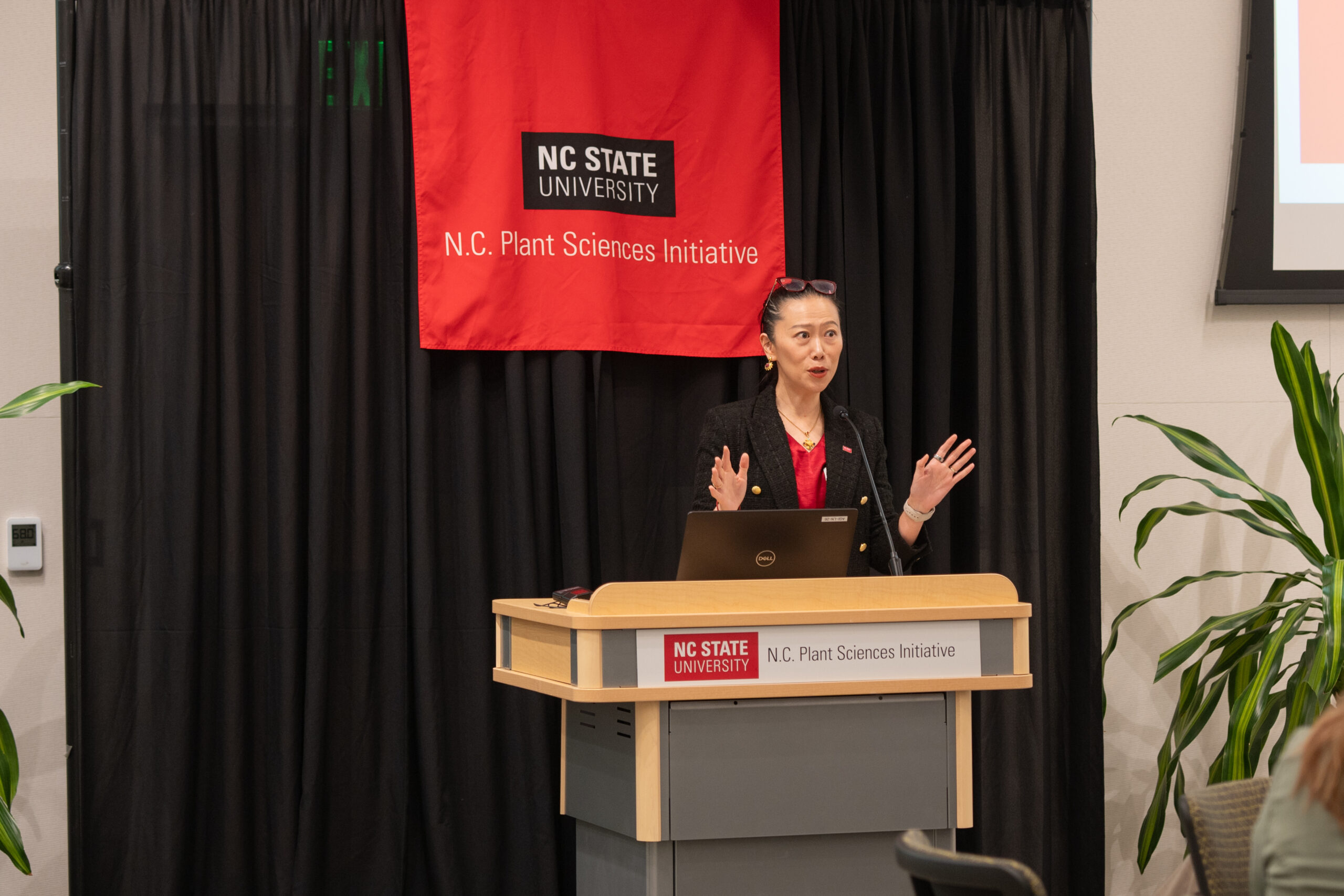
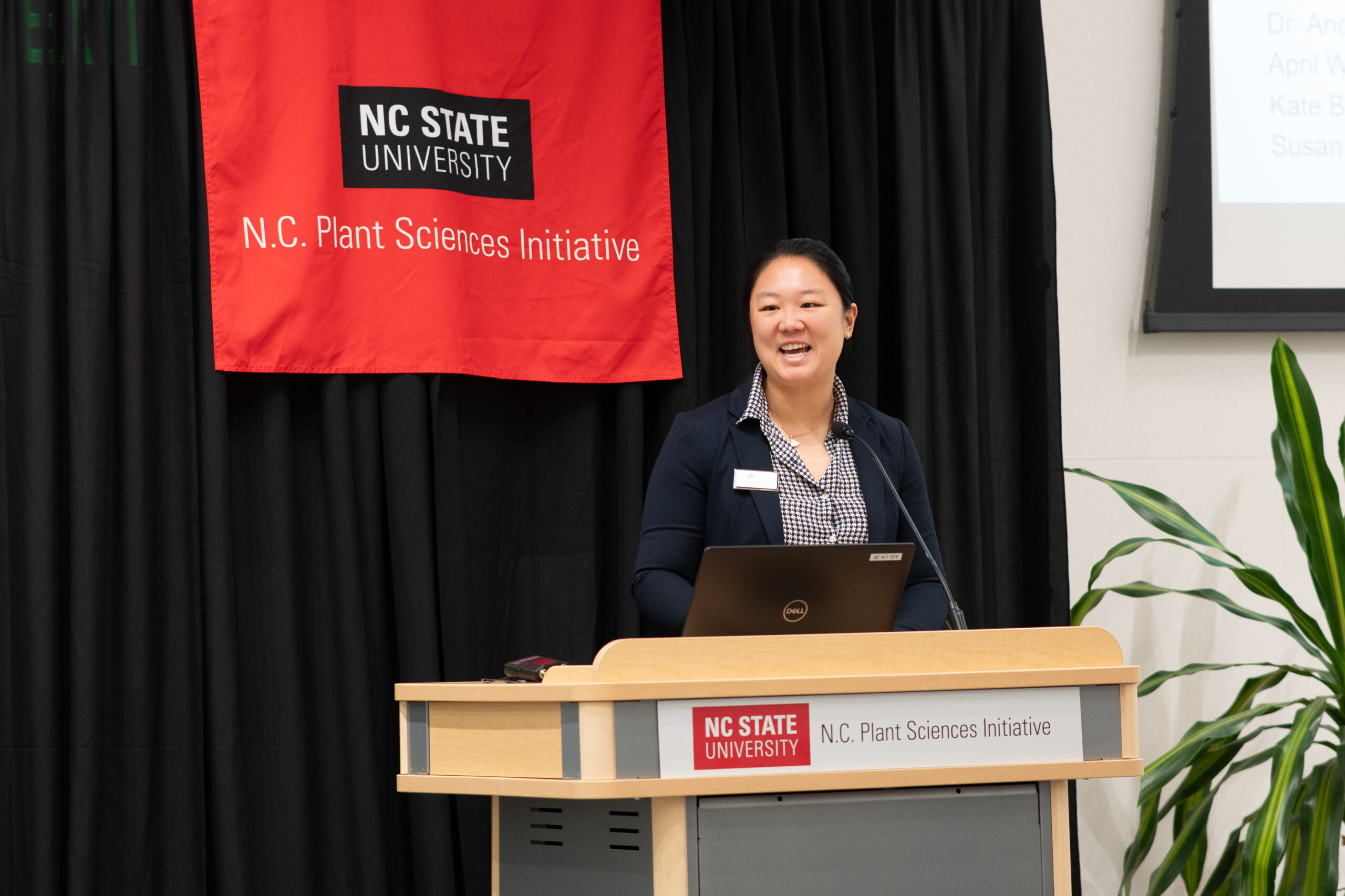
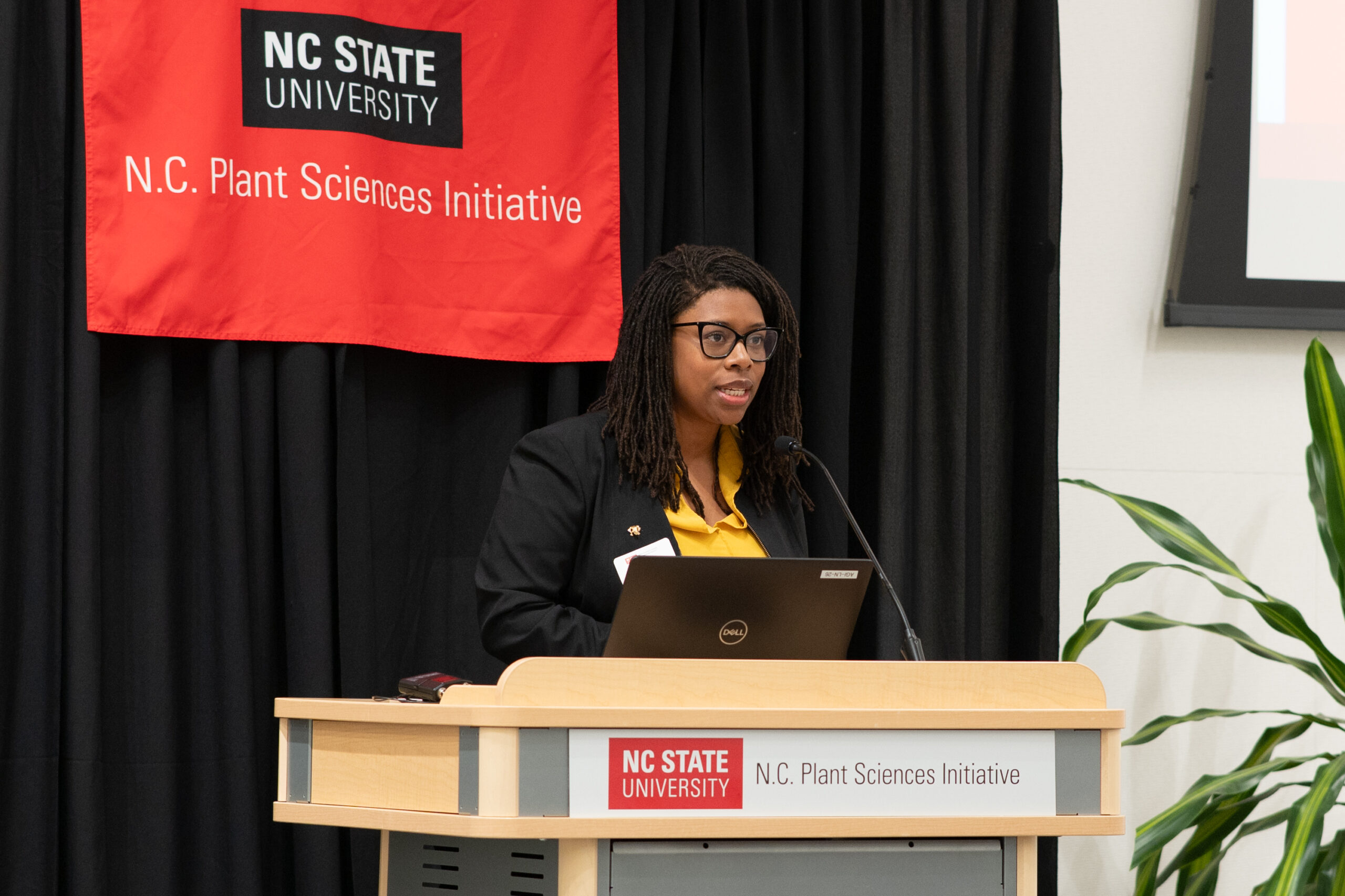
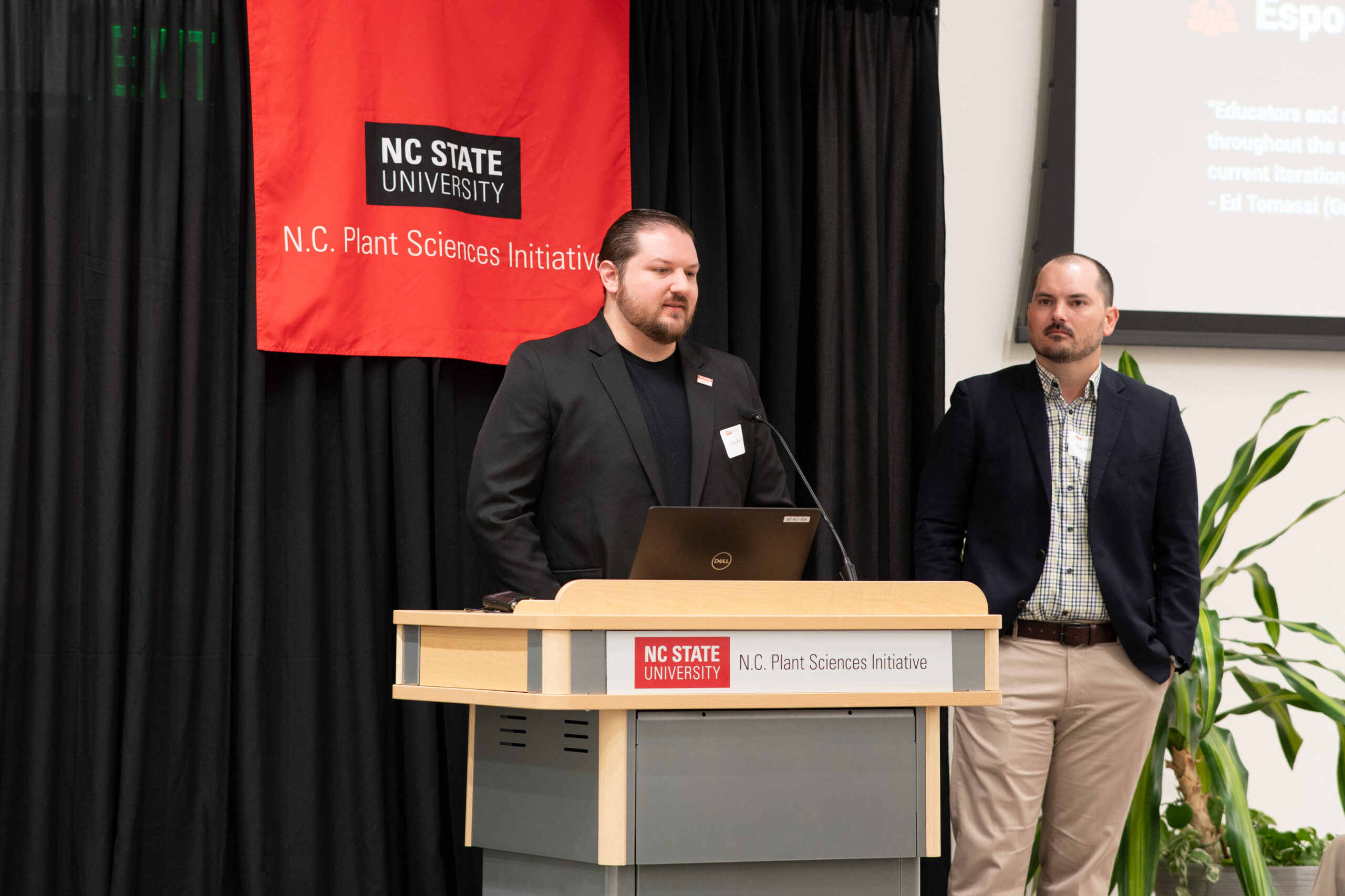
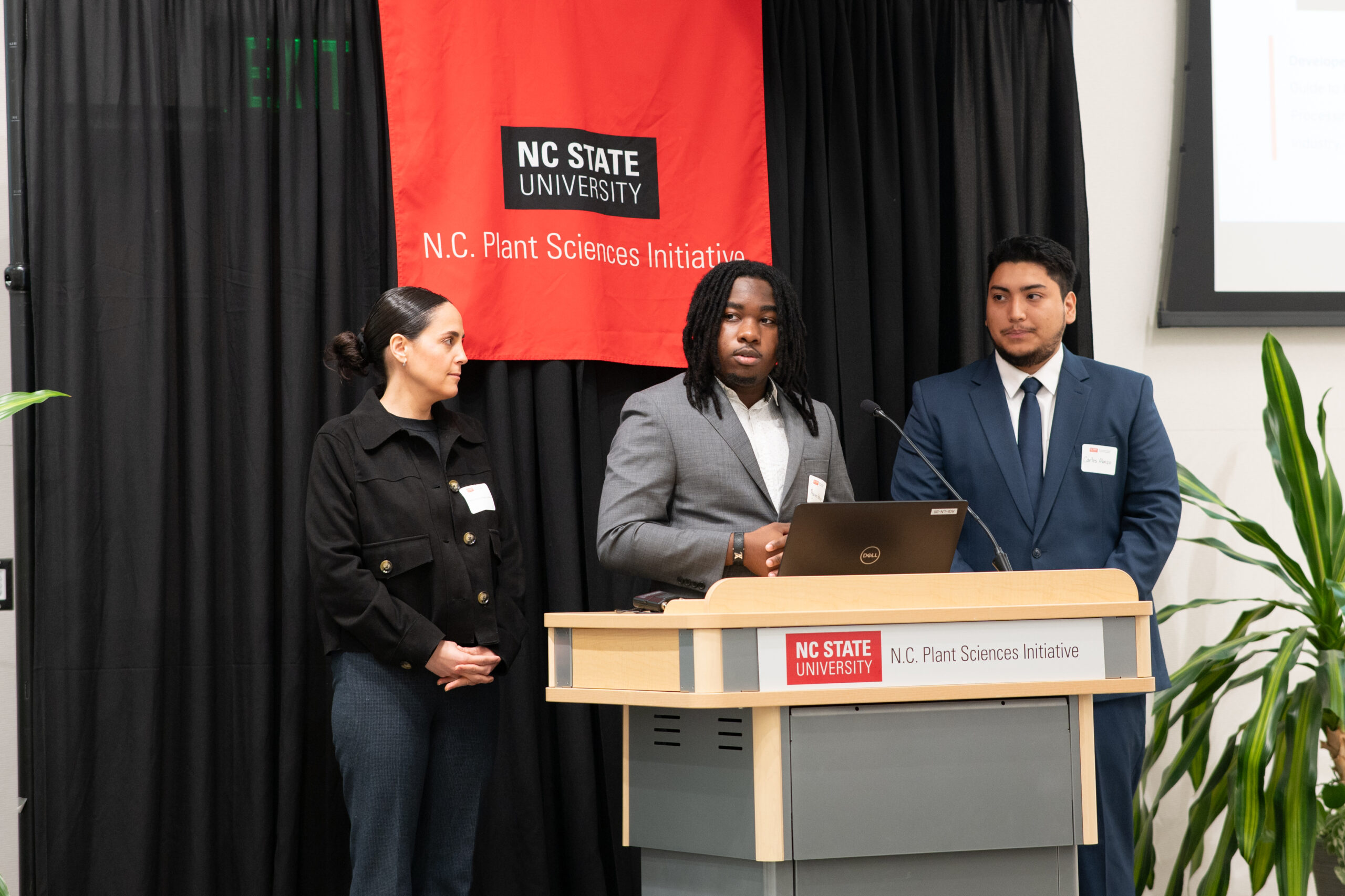
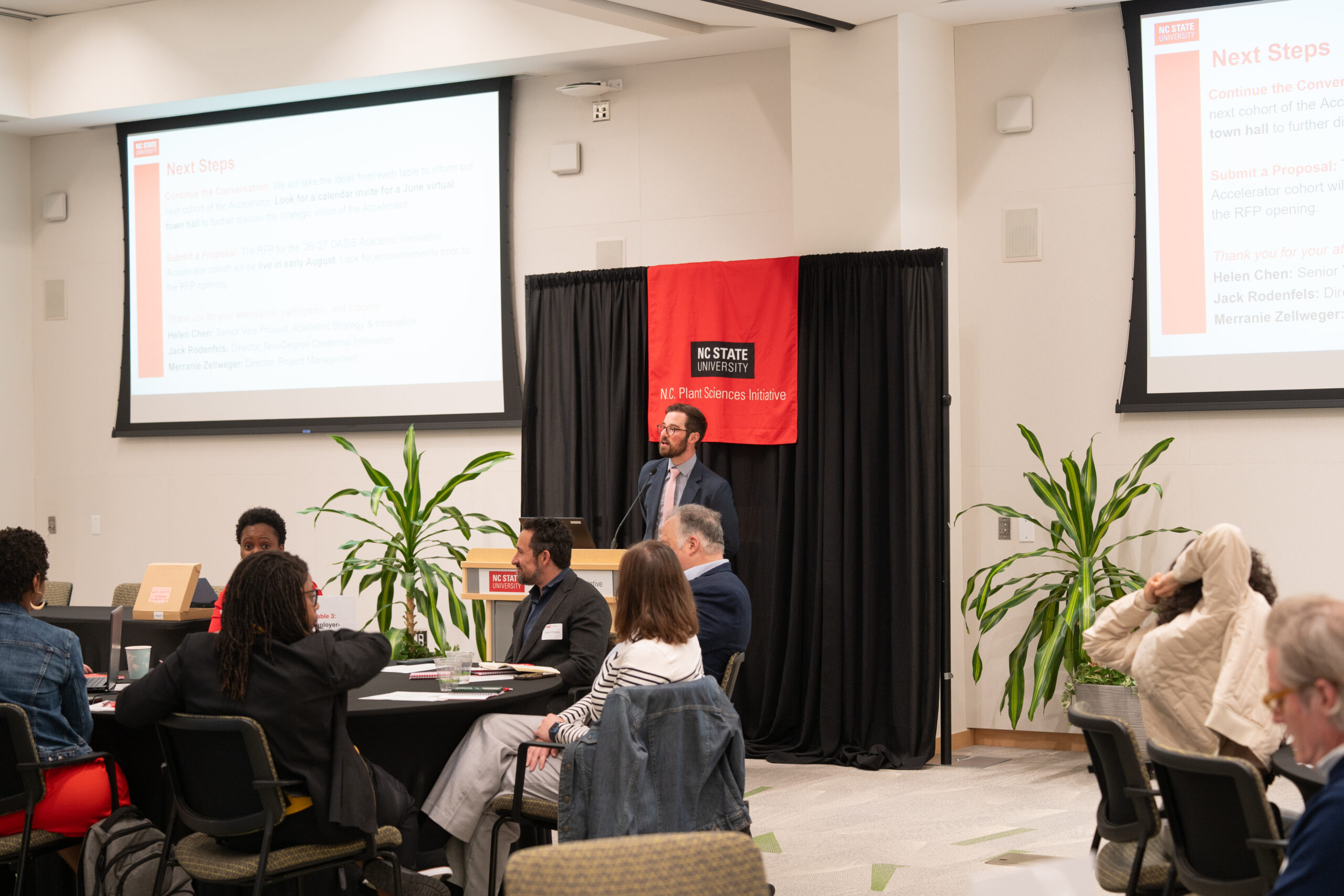
During the Showcase, cohort participants shared the discoveries they made while in the Accelerator during a series of lightning talks. The Esports project highlighted below offers one example; OASIS will publish features on each of the seven cohort projects in the coming weeks.
One of the projects, “Designing Esports Workforce Development and Curriculum,” focused on NC State’s Esports 360’s mission to provide the NC State and broader North Carolina community with transferable workforce skills and requisite credentials that support ongoing workforce development in esports and the broader technology and event industries.
This work builds on a major state investment. In 2021–2022, the North Carolina General Assembly committed $12 million for an on-campus esports arena and $4 million for a mobile arena truck to bring esports events statewide. Esports Director Cody Elsen, hired in 2023, opened the pilot space at Hunt Library in 2024. The Accelerator project picks up from there — translating that infrastructure into academic credentials and workforce pathways for North Carolina.
“The OASIS Accelerator has provided an opportunity to organize a truly interdisciplinary program that creates core technical and transferable skills for our students by leveraging the expertise and technology found on campus,” said Cody Elsen, Esports program director.
Project lead Kyle Bunds (College of Natural Resources), working with Cody Elsen on industry partnerships, academic credentialing, and workforce development, brought together an interdisciplinary team — Nathan Williams (College of Natural Resources), Topher Maraffi and Ryan Khan (College of Design), and Benjamin Watson (College of Engineering) — to develop the concept of Esports 360. Their Accelerator project aimed to build multiple facets of Esports 360 simultaneously.
“Through the Academic Innovation Accelerator, we found that the process of creating a Minimal Viable Product (MVP) supported our goals to create transferable learning modules for both the labor market and the student body,” said Bunds. “We pivoted to the creation of a single workshop to test the viability of future, individualized workshops. To prepare for the workshop and subsequent curriculum development, we conducted a market analysis, spoke with industry partners, explored the current curriculum, and developed a minor pathway with three tracks.”
What emerged is a method, not just a workshop. The team built a career-skill-curriculum map — a deliberate, repeatable approach to intentional course and curriculum design that translates workforce demand into specific learning experiences. Their model triangulates three inputs: labor market analytics, employer input, and student interest. Together, those inputs form a program design framework that can scale beyond Esports to other programs across NC State.
Ultimately, the team aims to make Esports 360 the NC State hub for both students and the North Carolina labor market, providing workforce development opportunities across the gaming industry. The Accelerator allowed the team to start their strategic goals by launching a pilot workshop with students and faculty, developing the initial course of a microcredentialing program for working professionals, and creating an Esports minor proposal with three minor pathways utilizing already-existing NC State courses. In the immediate future, they plan to connect their pilot project to long-term academic goals by formalizing the workshops, further developing the microcredentialing program, and establishing the Esports minor with tracks in event management and marketing, production, and game design.
“Our cohort members worked diligently throughout the year to move academic innovation forward both locally in their units and institutionally,” said Jack Rodenfels, director of Non-Degree Credential Innovation. “They’re creating deliverables that embody academic strategy and innovation in service of NC State’s land-grant mission and R1 research enterprise.”
Following the lightning presentations, scholars presented from The Friday Institute for Educational Innovation’s PEER Team, providing program evaluation, educational research and capacity-building efforts to drive organizational improvement within the Accelerator.
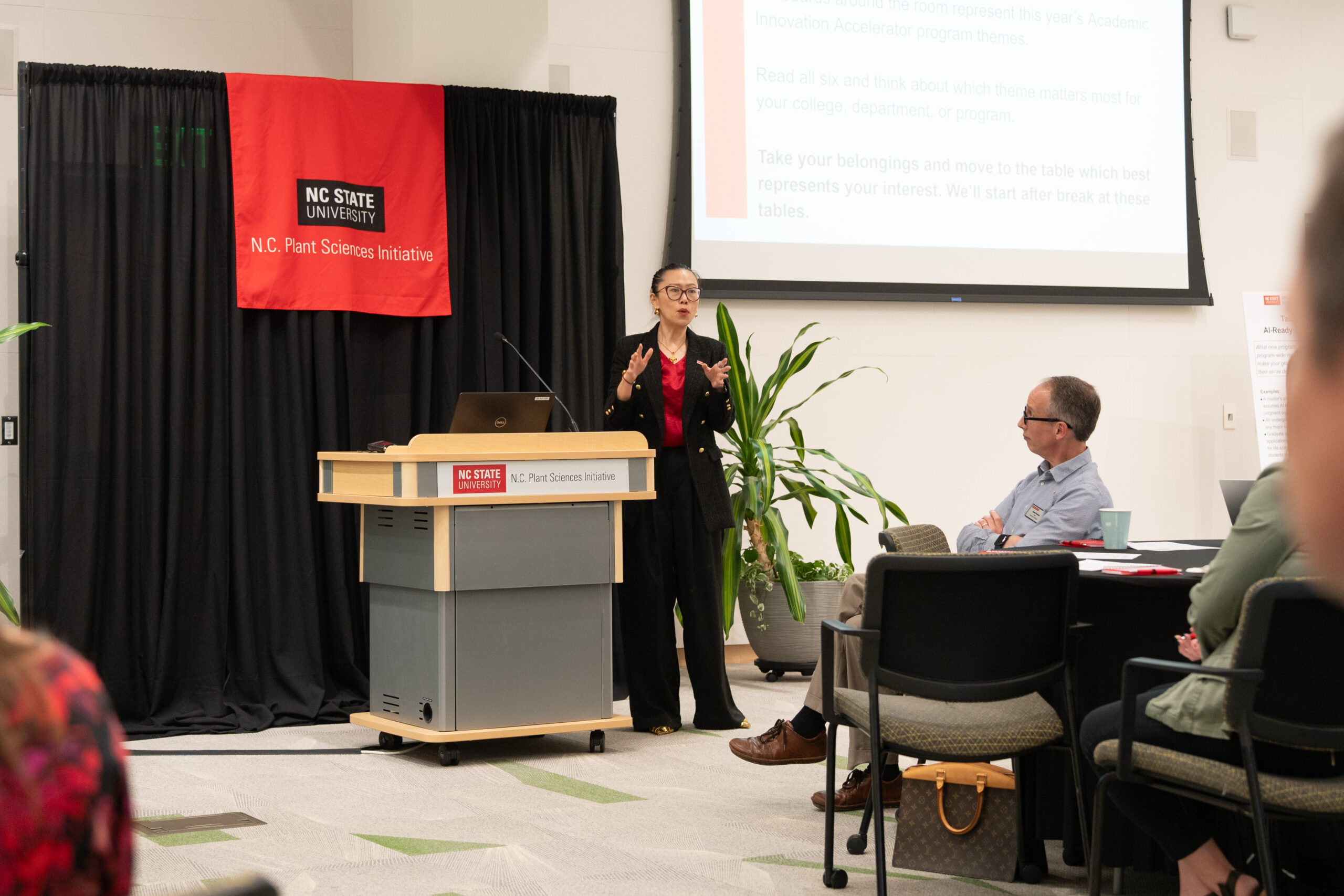
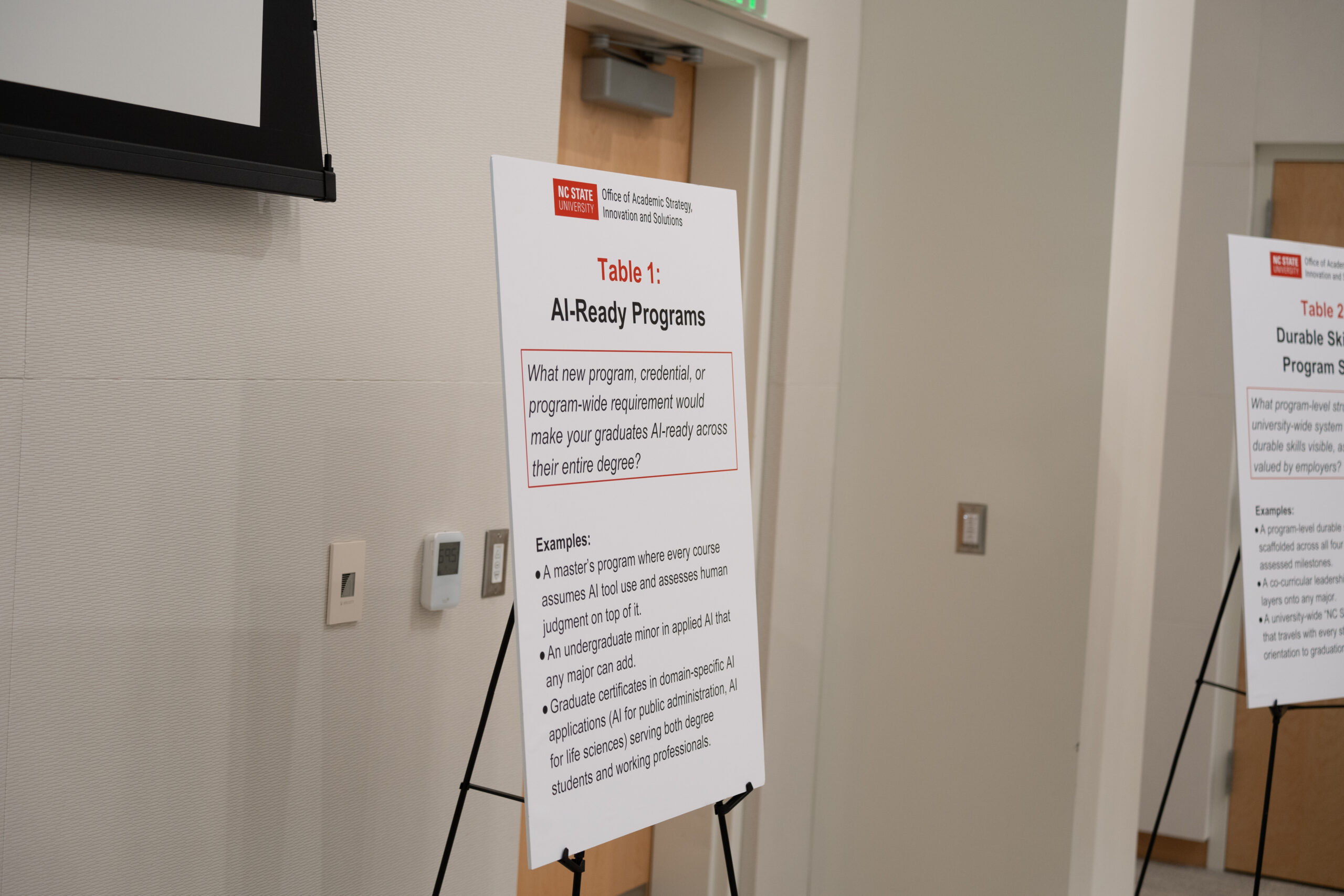
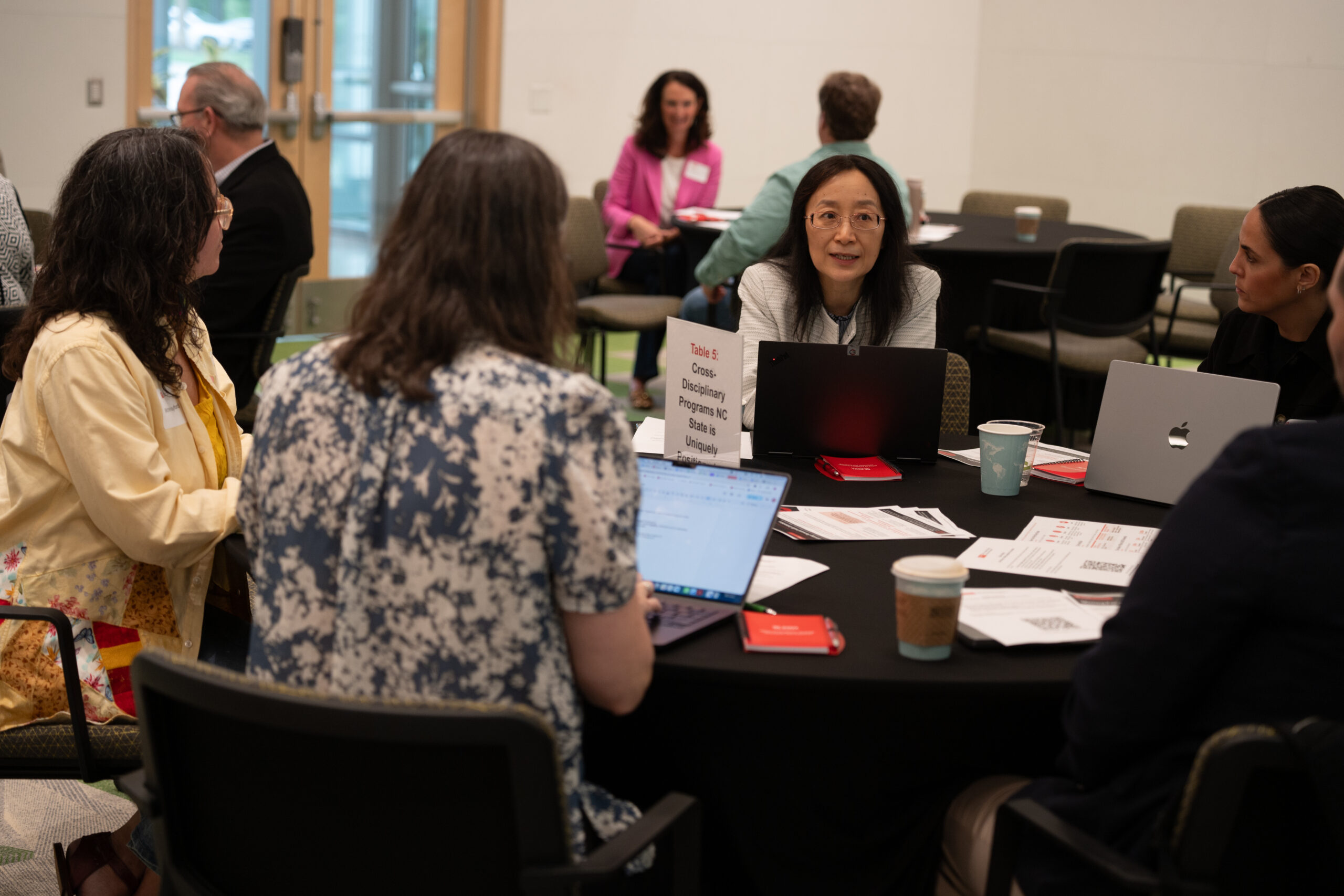
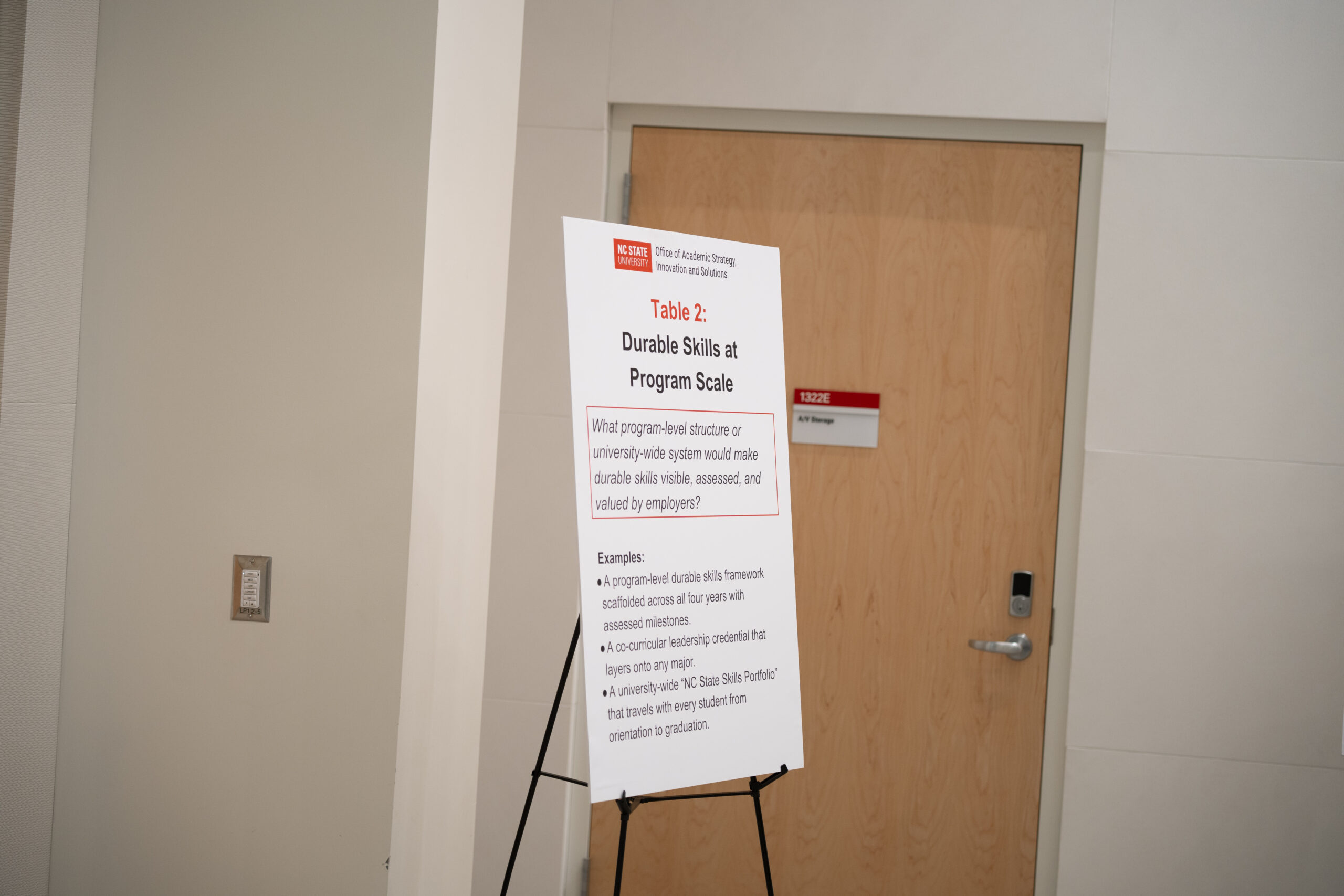
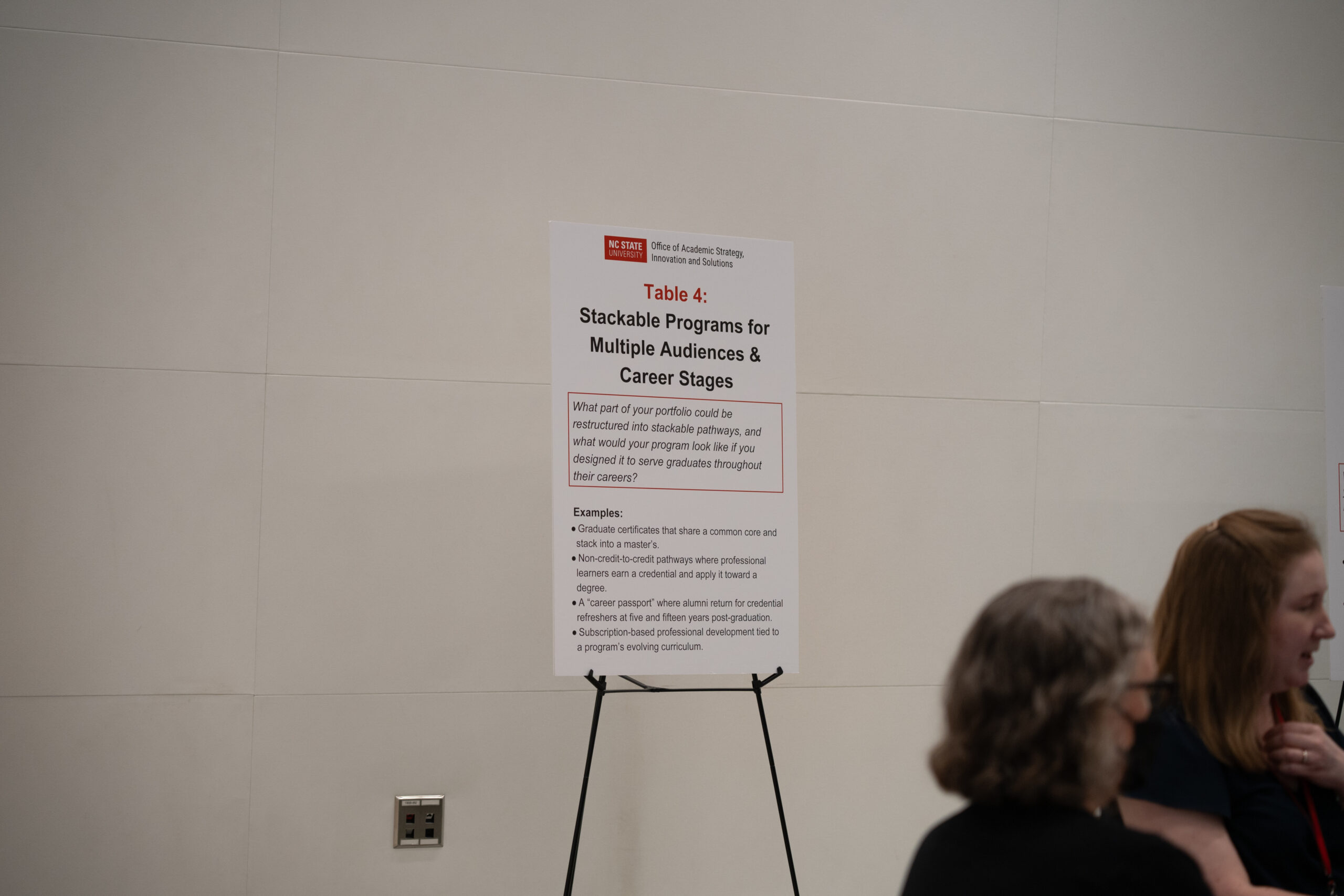
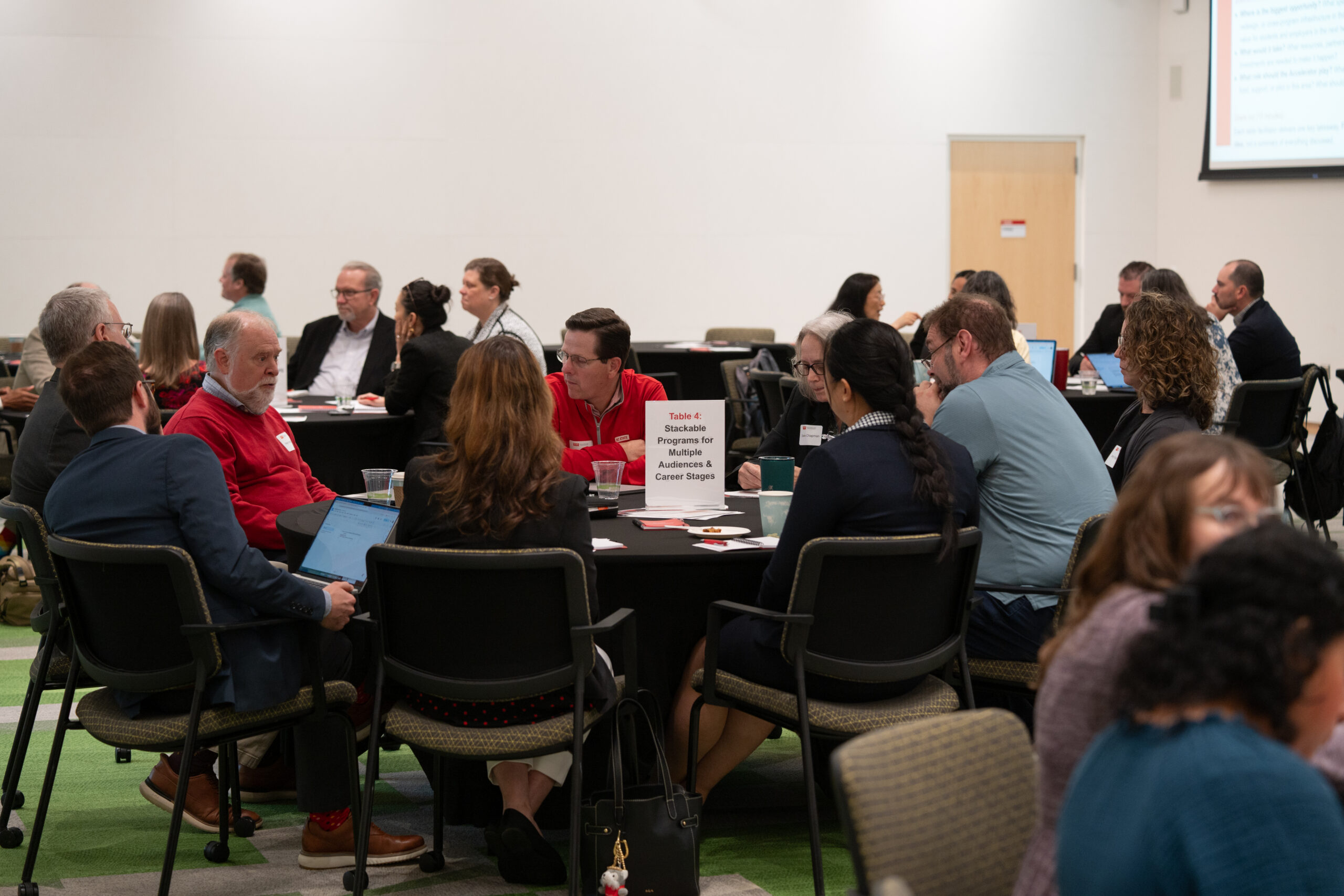
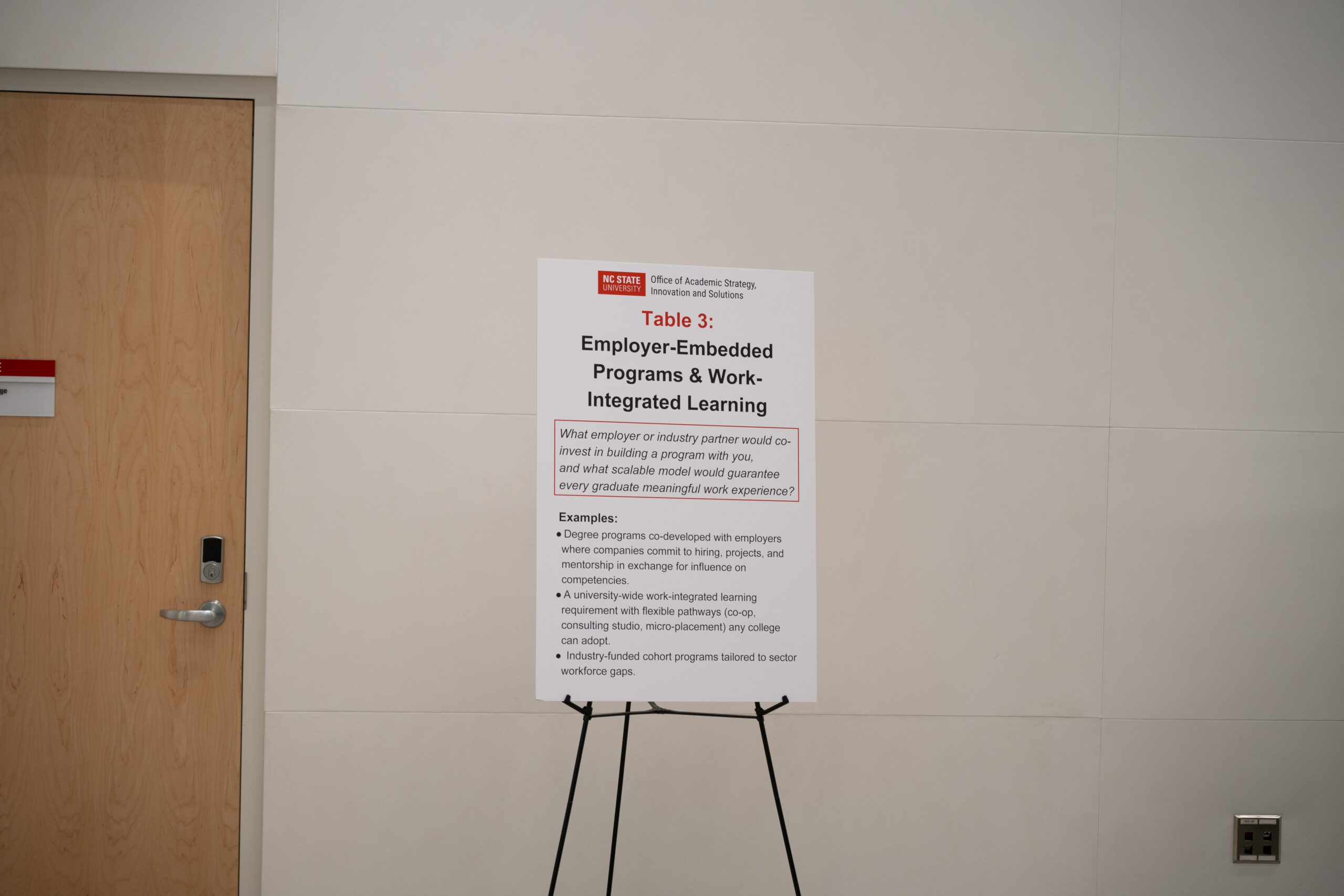
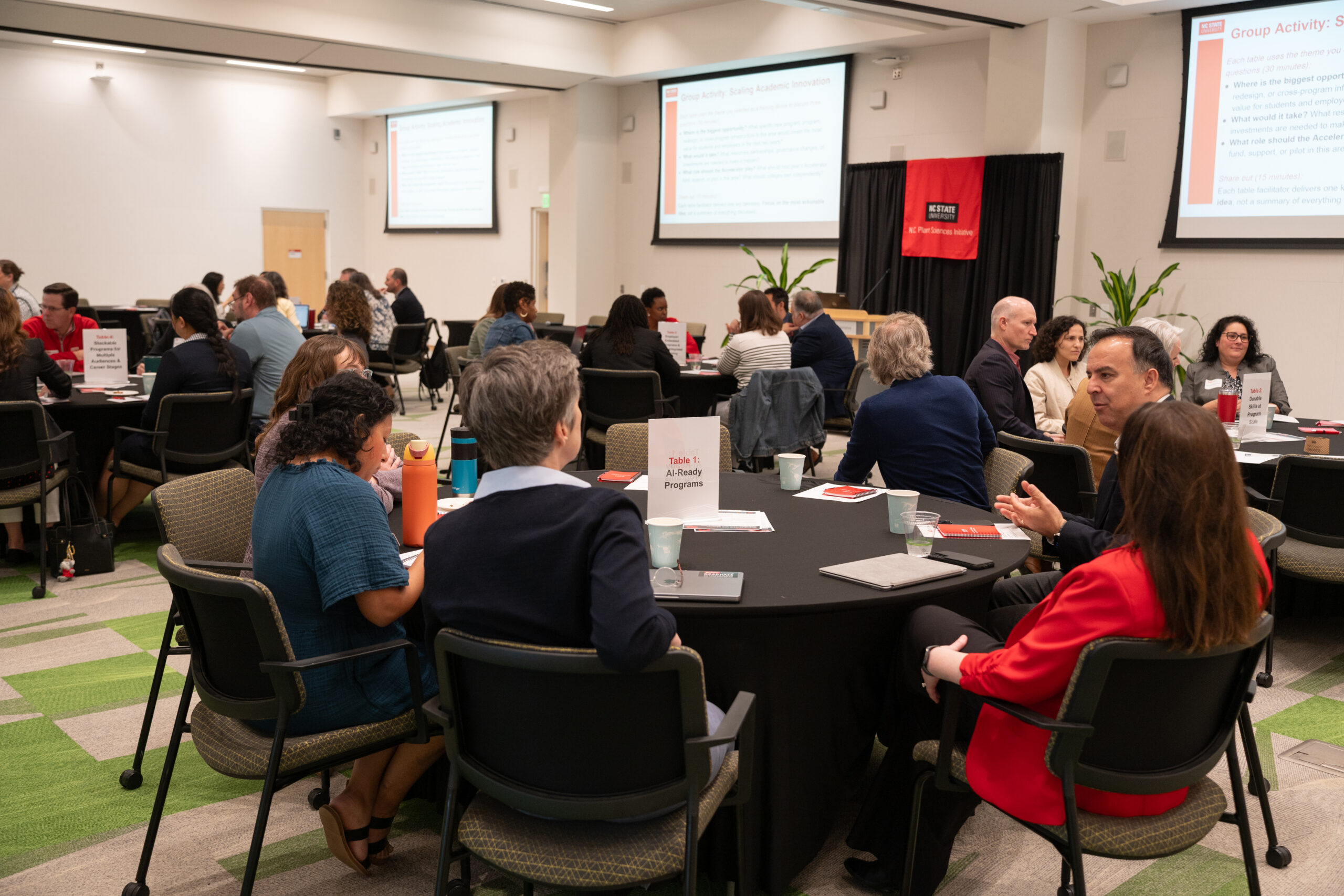
Next, Showcase participants and attendees formed groups to discuss the projects and future categories for the Accelerator to focus on to help cohorts scale academic innovation. These groups included: AI-Ready Programs; Durable Skills at Program Scale; Work-Integrated Learning and Talent Ecosystem Design; Stackable Programs for Multiple Audiences and Career Stages; Cross-Disciplinary Programs NC State is Uniquely Positioned to Build; and What’s Missing?
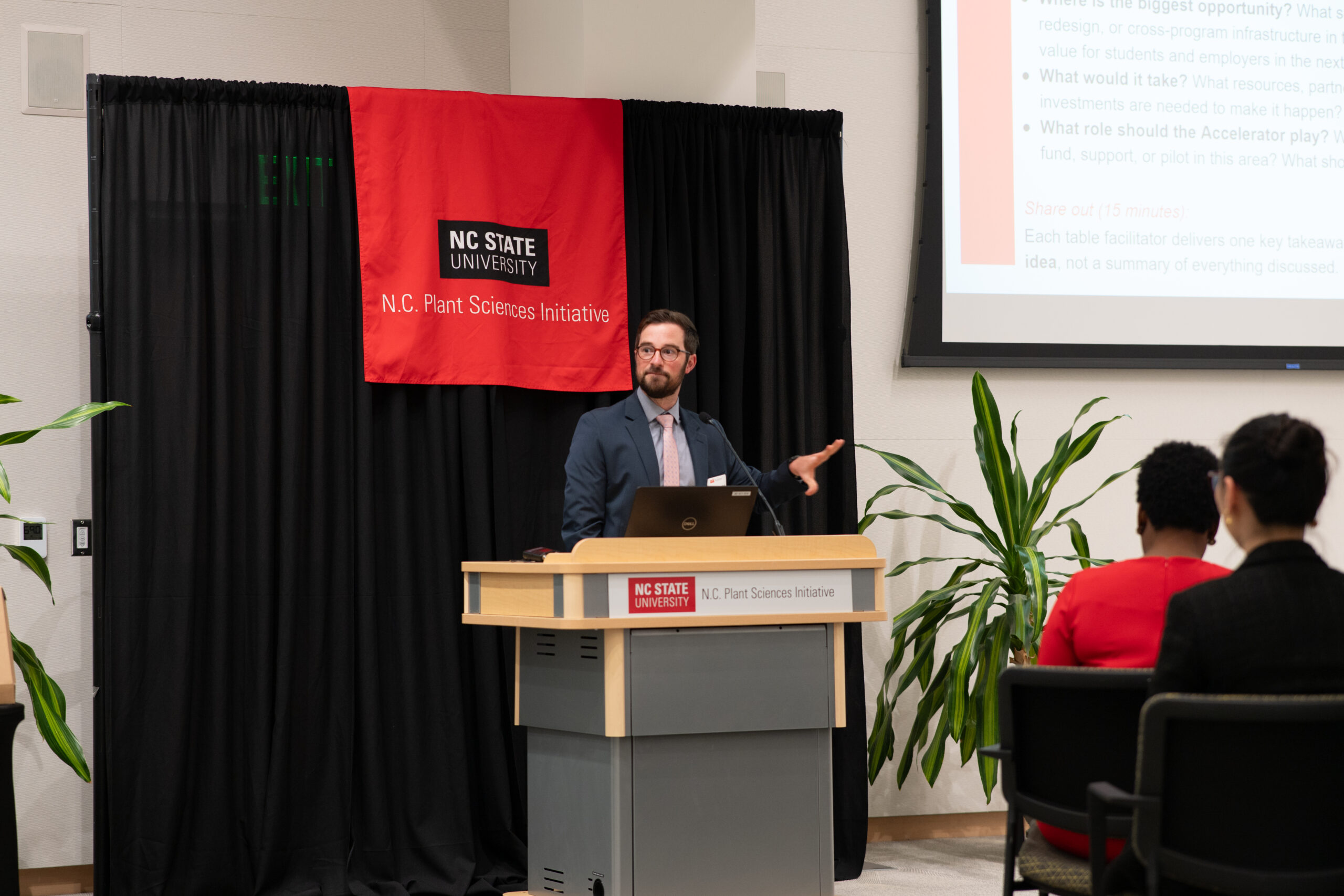
Each table used a specific theme as a framing device to discuss three questions:
- Where is the biggest program opportunity? What specific new program, program redesign or cross-program infrastructure in this area would create the most value for students and employers in the next few years?
- What would it take? What resources, partnerships, governance changes or investments are needed to make it happen?
- What role should the Accelerator play? What should next year’s Accelerator fund, support or pilot in this area? What should colleges own independently?
What’s Next
OASIS will take the feedback from each of the table discussions and use it to inform the next iteration of the Accelerator. Faculty and staff are invited to join OASIS on June 18 from 10-11 a.m. for a virtual, informal town hall discussion to summarize what was heard from Showcase participants, and to be active in shaping the next cohort of the Academic Innovation Accelerator. A request for proposals for the 2026-27 Academic Innovation Accelerator will open in early August. For more information, contact Jack Rodenfels, Director of Non-Degree Credential Innovation at 919.515.7541 or via email at jtrodenf@ncsu.edu.