At NC State, data science plays a key role in delivering the university’s land-grant mission of excellent teaching, the creation and application of knowledge, and engagement with public and private partners. The Data Science and AI Academy does this through courses and outreach, but also through coordinating with the outstanding SECU Public Fellows Internship program (State Employees Credit Union), run by the NC State Career Development Center.
Internship Initiative
The SECU Public Fellows Internship program was piloted at three universities within the University of North Carolina System: Appalachian State University, East Carolina University and the University of North Carolina at Pembroke. Due to increasing interest and growth opportunities, the program expanded to the rest of the universities within the UNC System, including NC State.
At NC State, the program is administered through RuralWorks!, an internship program supporting social, economic and technological development across North Carolina. RuralWorks! offers engaging internships for students who work with employers to achieve workplace goals in rural communities.
“This internship program has been designed to help connect non-profit and government agencies with talented NC State students,” said Sam Sanger, rural outreach coordinator from NC State’s Career Development Center.
The SECU Public Fellows Internship program connects undergraduate students with an interest in service to local communities and their leaders in order to gain work experience while giving back. At NC State, funding is available for 20 students every summer, with each student eligible for $5,000 in funding. Interns may focus on a variety of areas, including, but not limited to: research, community outreach, public policy, communications and social media, fundraising and direct client services (i.e. tutoring and mentoring).
Data Science and AI Academy Involvement
Over the past three summers, NC State’s Data Science and AI Academy (DSA) has partnered with Career Development Center to build mini data projects into the SECU Public Fellows summer internships. Hangjie Ji, assistant professor of mathematics and director of industry and community-based research and education at DSA has served as the DSA faculty lead, mentoring three graduate students each year, who in turn mentor the undergraduates. Sanger and Erin O’Neill, employer relations coordinator, both from the Career Development Center, help administer the program.
“The data science component of this internship program is unique to NC State,” said O’Neill. “Student interns are paired with data science graduate assistants to identify a need within a government or nonprofit organization that data science can help solve. But they’re not just doing an internship, they’re also creating transferable projects that they can take with them into the future, and hopefully they will use that knowledge to continue to do good work in whatever field they choose to go into.”
Ji began working with the program in the summer of 2023, helping recruit graduate students from the Departments of Computer Science, Mathematics and Statistics to assist undergraduate interns in navigating the internship experience and combing through data. She helped oversee interns at organizations ranging from local government institutions, the Coastal Carolina Riverwatch, North Carolina Museum of Natural Sciences and more. Ji and the graduate students also mentor high school students in a similar program at NCSSM-Morganton.
“It is amazing to see the impact that these students and their use of data science have had on organizations that may not have had the resources to solve certain problems otherwise,” said Ji.
For example, Maria Lord, an intern from summer 2023, worked with the Veterans of Foreign Wars. Lord spent the summer extensively examining receipts of tax refunds to identify any opportunities to recover finances. At the end of the summer, Lord helped the VFW recover more than $10,000 in tax refunds. She graduated in 2024 and is now a research assistant at the NC General Assembly.
“This is an example of knowing that the data is there, but the resources aren’t available to do anything with the data,” said Ji. “Our NC State interns, however, can come in and use data sets to problem solve and fill the gap where other funding falls short. The outcomes really are amazing.”
Shih-Ni Prim, a Ph.D. student in the Department of Statistics, was a graduate mentor to six student interns. She met with them individually throughout the summer, helping them through the steps of their data science project: data collection, data cleaning, visualization and presentation.
“The work my students did was wide-ranging, interesting, and meaningful. For example, one student worked at a legal-aid organization that provides free legal services, one worked at a NC State lab researching nutrition information and one worked with a childcare center. They got to see how nonprofit organizations benefited the lives of the communities, and at least one student continued working at the organization after the internship ended. The SECU Public Fellows Internship program helped bridge students’ education and their possible careers and encouraged students to work at nonprofit organizations,” Prom said.
Shaniya Edmonds, a senior majoring in economics, interned with the Legal Aid of North Carolina (LANC) Raleigh office during summer 2025. Her main project involved analyzing LANC’s internal case data to understand the shifts in civil legal needs for North Carolinians before and after COVID-19. Using data from 2015 to 2025, Edmonds compared trends in different case categories such as housing, public benefits and family law. She also identified emerging categories like health-related and education-related cases. The data project helped Legal Aid visualize geographic and demographic patterns in clients’ needs, which can inform future outreach.
“Data science played an essential role in my work; it allowed me to turn large datasets into meaningful insights,” said Edmonds. “I used Google Sheets and Microsoft Fabric to clean, organize, and create a visualization of the case data to highlight changes in service demand over the 10 years. Through this process, I realized how data science can turn random figures into stories that help organizations make informed and equitable decisions to serve their communities.”
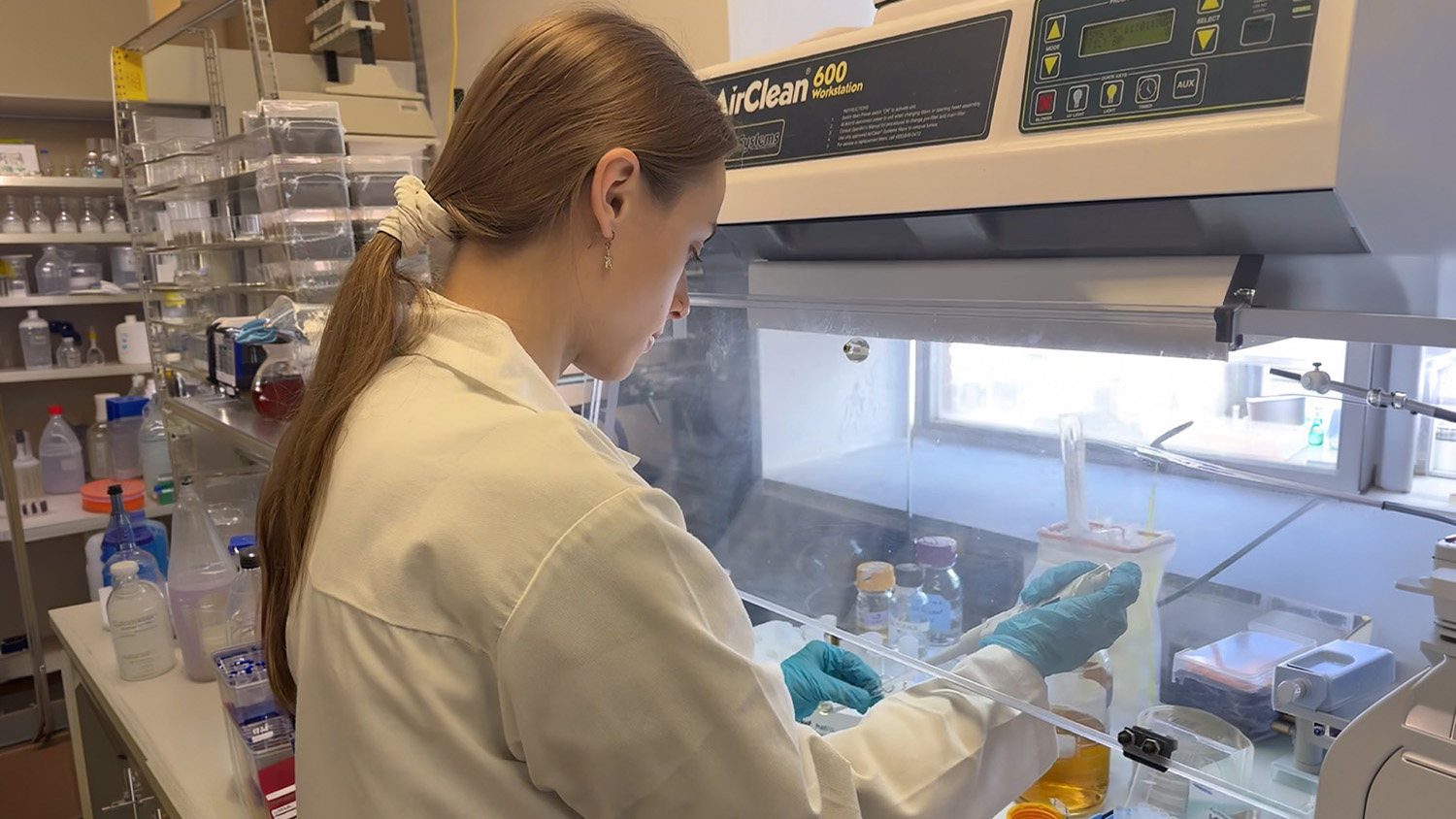
Meara Kane, a junior majoring in marine science, interned at Coastal Carolina Riverwatch (CCRW) this summer. She worked on their harmful algal bloom (HAB) response and mitigation efforts, which consisted of a combination of analysis of historical bloom data from the North Carolina Department of Environmental Quality (NC DEQ), conducting field sampling to evaluate water quality parameters and algal toxin presence in the New River, and coordinating public outreach to increase awareness of HABs and their effects.
Data science played an essential role at the beginning of her internship, where she was tasked with finalizing reports evaluating water quality and microbial trends in the White Oak River Basin, as well as utilization of the NC DEQ’s Fish Kill and HAB Dashboard. In order to work with large data sets from a variety of sources, she learned to use R — a programming language used for statistical computing, data analysis and visualization — to run basic statistical analyses and create data visualizations. These visualizations were also used in science communication pieces, including formal reports, presentations to local fisheries groups and social media posts to communicate the impact of HABs and CCRW’s work in this area to community stakeholders.
This summer, Chloe Hammonds, a sophomore majoring in psychology and criminology, interned at the Burnt Swamp Baptist Association in Pembroke, North Carolina. For her research project, she surveyed the association’s 71 pastors to identify the most prominent counseling challenges they face and areas where additional support is needed. Using the findings, she developed biblically grounded, research-based materials such as PowerPoints, pamphlets, workshop packages and local referral lists to strengthen pastoral counseling efforts.
In addition, she led a major administrative project to digitize the association’s annual minute books from 1881 to 2024, preserving more than a century of priceless history. Both projects created lasting value for the association and its pastors.
“Data science was a great tool for collecting and analyzing data to create solutions that properly addressed core problems and brought about lasting change,” said Hammonds.

“From 2023-25, the program has included 63 undergraduates and 59 organizations across 29 North Carolina counties,” said Ray Levy, executive director of NC State’s Data Science Academy. “We are excited about the potential to expand this model to 100 counties.”
Making an Impact
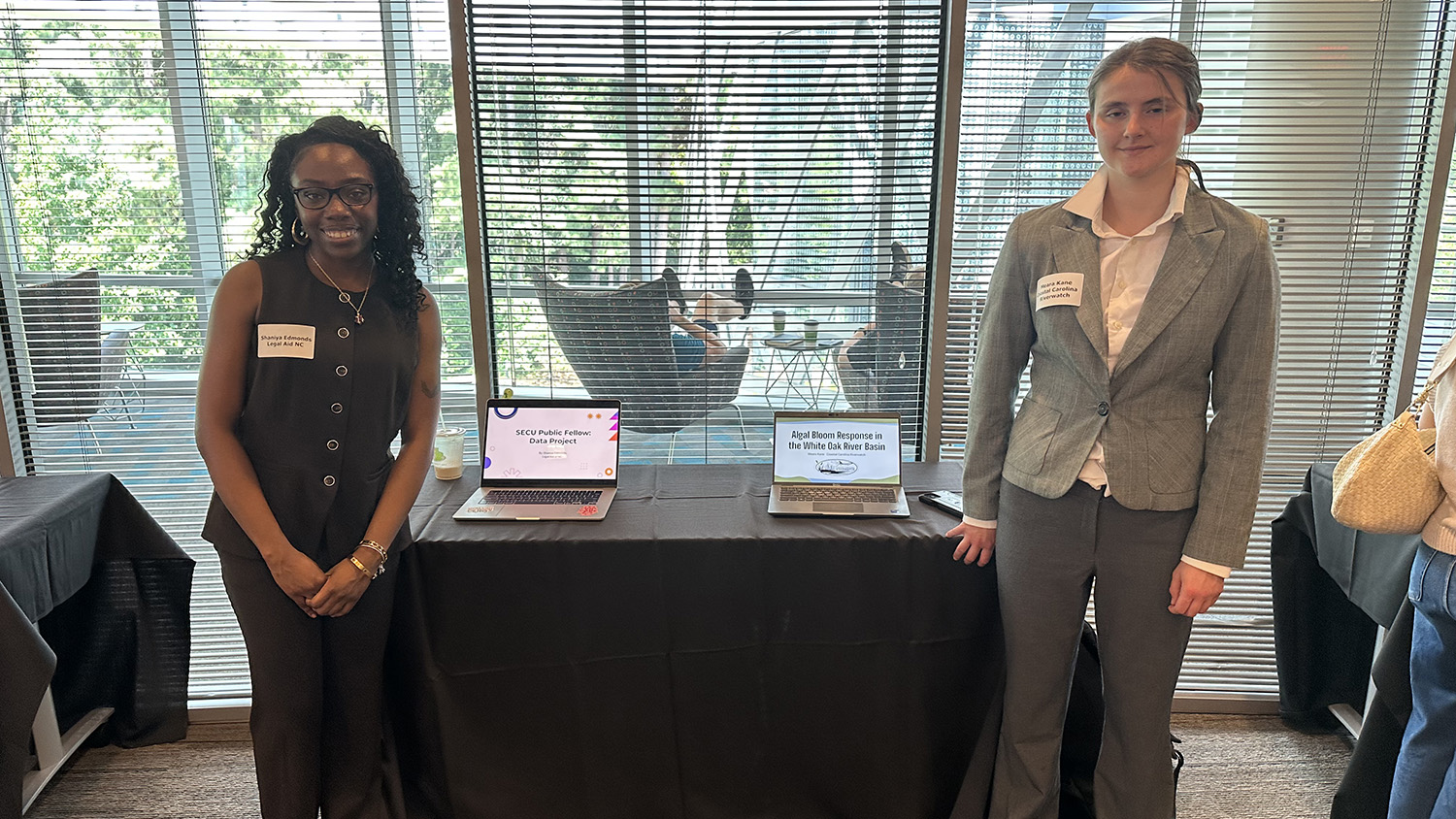
In September, Talley Student Union hosted a showcase for the SECU Public Fellows Internship program, where students highlighted their summer experiences within the program. Faculty from departments across the university, representatives from the State Employees Credit Union and industry sponsors attended and were able to see firsthand the impact these summer projects made on all involved.
Projects presented at the showcase included:
| Student Name | Internship Site | Project Subject/Title |
| A’Nya Cox | Haven House | The Prevalence of Adolescent Mental Health Diagnoses |
| Ashley Clemmer | Learning Together | Learning Together School Year 2024-2025 Data |
| Aubrey Toler | Healing Transitions | Impact of Parental Relationships on Adult Substance Use |
| Betsy Shepherd | YMCA Camp Seafarer | YMCA of the Triangle Sales |
| Brynn Capuano | FEEd Lab | Loops, Leverage, and Learning: A Systematic Exploration of Agents’ Work Implementing Food/Agriculuture Education, Gardening, or Local Food Procurement/Purchasing in Childcare |
| Caroline Murrell | Chatham Education Foundation | Comparing 3rd grade reading vs. lunch eligibility rates (2019–2024) |
| Chloe Hammonds | Burnt Swamp Baptist Association | Top 5 Issues BSBA Pastors Face |
| Courtney Morgan | North Carolina Museum of Natural Science | Marine Mammal Stranding Events |
| Evalyn Hunneyman | Rise Up Community Farm | Volunteer/Community Engagement |
| Jonathan Jackson | ECU Foundation | Annual Fundraising Events Trends |
| Kaleigh Penland | Thomasville NC | Downtown Thomasville, NC Main Street Project |
| Katie Madison | New Hope Clinic, Boiling Spring Lakes | Surveying whether or not patients utilize online health portal |
| Kianna Redetzke | The Resiliency Collaborative | Summer 2025 Cohort Experience & Satisfaction Survey |
| Madeline Barnes | NC Department of Revenue | Unauthorized Substance Tax Enforcement |
| Matthew Stocks | Inner Banks Legal – Washington, NC | Bankruptcy Data Project |
| Meara Kane | Coastal Carolina Riverwatch | Algal Bloom Response in the White Oak River Basin |
| Molly Sue Smith | Tambra’s Place | TambraPlace: Volunteer Recruitment & Motivation |
| Seth Ramey | Mount Airy Parks and Recreation | Mount Airy Summer Adventure Camp Data Analysis |
| Shaniya Edmonds | Legal Aid of NC | Evolution of Legal Needs Before & After COVID-19 |
| Sofia Worters | Mind the Gap | Mental Health Service Gaps in Charlotte, NC |
Now, Ji and her colleagues at the DSA and Career Development Center are in the process of planning for next year’s group of interns. In the spring, graduate assistants and undergraduate interns will be recruited, with a final cohort decided upon in April. Then, undergraduate students will work with the Career Development Center on organization placement and projects for the summer. At the internship orientation, SECU representatives will be on hand to give an overview of the internship experience.
“We’re hoping that the SECU Public Fellows Internship program will continue to grow and attract bright minds who can utilize data science to solve grand challenges for organizations throughout North Carolina,” said Ji. “Our students are proving the importance of data in all facets of public life, and they’re improving outcomes for organizations with data-driven projects and decisionmaking.”
If you would like to know more about the SECU Public Fellows program, please email program coordinator Sam Sanger at [email protected].